
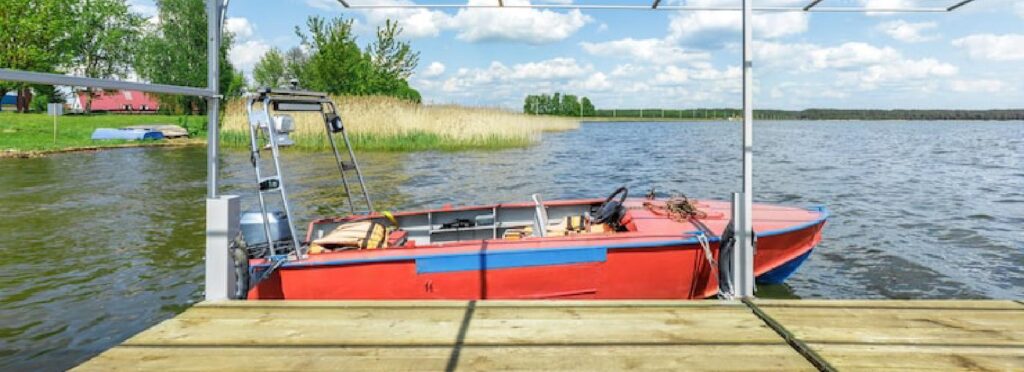
Picking a spot for your lift sounds simple, but it’s where most people slip up. At Dockside Mobile Boat and Lift Maintenance, we’ve seen costly lifts lean over just because of poor Lift Placement. And the sad part is, it was avoidable. Think of this as advice from your older brother, who already messed up so you don’t have to. We’ll cover depth, bottom type, tides, current, and prep work. Read it slowly, because every small detail here really does count.
Checking Water Depth During Seasonal Changes
Water levels move around all year. Rain lifts them, dry weather lowers them, and one storm can move sand overnight. What worked last year might fail this year. That’s why we check depth every season. If you are planning a Boat Lift installation in Cape Coral, FL check the water depth under different conditions before choosing a location. The canal water levels can change with weather and tides, so test the depth a few times. A few minutes now can spare you a lot of stress later.
Choosing the Right Boat Lift Location Based on Water Depth
Water depth should be the first thing to check. Your boat has to sit in enough water when it’s down, and it also needs room to climb out when you raise it. If it’s too shallow, the hull drags along the bottom, and that’s a mess nobody wants. However, if the water is too deep for the lift’s design, its legs may need to extend farther, potentially reducing stability. Measure when the water is at its lowest, not on some nice full day. We always look at the worst case first, because that’s the day that causes trouble. A spot that looks great in spring can turn into a mud flat once summer wraps up.
Placing Boat Lifts in Sandy and Muddy Bottoms
Sand packs down well enough, though moving water will wash it out from around the legs over time. Mud is even softer, kind of like a wet sponge under a heavy book. For both, wide foot pads are your friend, because they spread the load so the legs stay up.
Good Lift Placement on soft ground simply means giving the lift more area to stand on. At Dockside Mobile Boat and Lift Maintenance, we usually add bigger pads and check them again after a few weeks. It’s funny how much a lift settles once a loaded boat is sitting on it.
How Seabed Types Affect Boat Lift Placement
Don’t think of the bottom as plain dirt. It’s the floor your lift stands on every single day. Whether it’s sand, mud, rock, or clay, each one holds weight in its own way, so each one needs its own plan. Hard bottoms hold well but can be a pain to work with. Soft bottoms feel easy at the start, but the legs sink a little more each month. So before you choose a spot, poke around and learn what’s really down there.
Adjusting Boat Lift Placement for Rocky Seabeds
Rock looks tough, and it is. But it’s lumpy, so one leg can land on a high spot while another hangs over a dip. The boat lift tilts to one side and the side resting on the higher point may bear more pressure than the other side. Position the boat lift legs properly to keep the lift stable and well supported. According to this boat lift installation guide, checking leg support and leveling the frame are important steps during installation. If the rock is rough, adjustable legs or small support plates can fill the gap. And don’t ever force a leg onto a sharp edge, because it can slide the second the weight lands on it.
Accounting for Tides and Changing Water Levels
The water climbs and drops all day, so your lift needs to cope with both extremes. High tide is the easy part, since the boat just floats right on. Low tide is the tricky one, so make sure the hull still clears the bottom and the lift can actually grab it. Observe the water level through several tidal cycles before choosing a location. Scribble down the highest and lowest marks you see. Then pick the spot that works for both, not just the easy one.
Maintaining Boat Lift Stability in Strong Currents
Fast-flowing water can push against a boat lift and put stress on its frame and supports. Strong flow can rattle the legs loose, scoop out the ground around them, and bend the frame over time. Look for a calmer pocket, like behind a bend or nearer the shore. A sturdy frame helps as well, and plenty of boaters look at Metal Boat Lifts when they want gear that can take constant pushing. We check bolts and braces often too, because a loose bolt gets worse fast when the water keeps pushing.
Avoiding Uneven Ground When Positioning Boat Lifts
Uneven ground causes quiet trouble. Even a gentle slope loads one side more than the other, and that extra weight wears parts out early. Walk the area, or get a friend to probe it, and feel for dips and bumps. Find the flattest stretch around. But if there’s none, fix the bottom first, because leveling the ground is far easier than living with a crooked lift.
Preparing the Seabed for Safe and Stable Boat Lift Installation
Proper preparation helps keep a boat lift stable and reduces the risk of avoidable repairs. At Dockside Mobile Boat and Lift Maintenance, we run the same checks before any lift goes in, and they apply to Boat Lift installation in Cape Coral, FL, or any other spot too.
- Seabed Stability Check: To start, we poke the bottom in a handful of places where the lift will sit. That shows how firm it is and finds soft pockets or hidden holes fast. If it feels weak, we shift the position or add support before moving on.
- Remove Loose Debris: Old rope, shells, rocks, and trash love to hide under a leg and tilt it. So we clear it all out by hand or with tools. Once it’s clean, each leg rests on a solid bottom, and the lift sits straight.
- Level Installation Surface: A flat base shares the weight evenly across the lift. We shave off high spots, fill the low ones, and check with a level. Take your time here, since it stops the frame from twisting and keeps the boat steady.
Follow these steps in order and your lift starts out right. And keep in mind that lift location isn’t a one-time job, so look it over again after big storms.
Conclusion
Good Lift Placement starts with reading the water and the ground before you build a thing. Depth, bottom type, tides, and current all play a part, so skipping any of them is a bad idea. Take your time, measure twice, and you’ll save both your boat and your wallet from pain. At Dockside Mobile Boat and Lift Maintenance, we want you to get it right the first time. If you’ve got questions or want a hand with your setup, contact us today.
FAQs
What Is The Best Depth For A Boat Lift?
The best depth gives your boat room to float freely at the lowest water level and rise fully when lifted. Always measure at the lowest point of the year.
Can A Boat Lift Sit On A Muddy Bottom?
Yes, it can, but it needs wide foot pads and regular checks. Mud lets legs sink, so extra support keeps the lift steady.
How Often Should The Seabed Around A Lift Be Checked?
Usually, you have to check this after a big storm. After a storm, water can move sand and mud fast, so if you don’t check this properly, small issues can grow into big problems.