
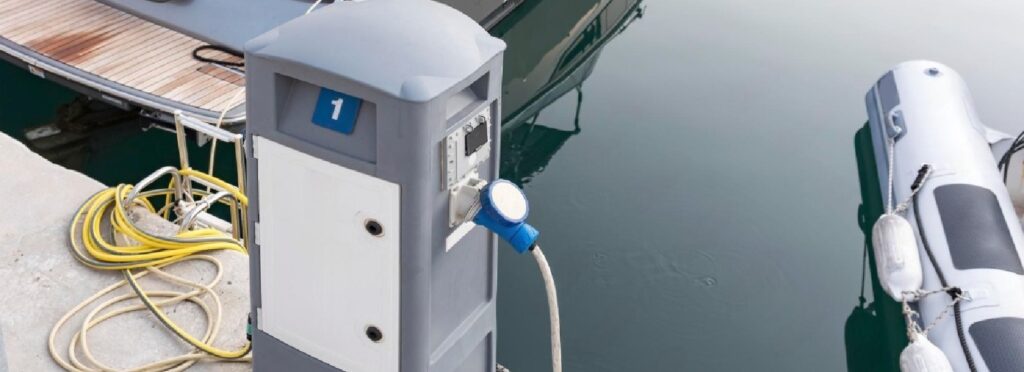
Do you keep your boat on a slip along the Caloosahatchee River or tucked away in one of Southwest Florida’s numerous canal systems? You probably already know how much work your boat lift is doing. Salt air, humidity, direct sunlight, and heavy daily use takes its toll on older mechanical lift systems much quicker. Mechanical controls fail, switches stick, and what once seemed like a simple task becomes a difficult one. This is why many boat owners are switching to digital boat lift controls and seeing a significant difference.
The Dockside Mobile Boat and Lift Maintenance crews are in docks all over the region every week, and one thing the happy upgraded customers always tell us is they wish they had done it sooner. If you have been procrastinating, this guide covers every reason to make the change to your dock, your boat, and to yourself and your time. And we also do Boat Lift installation in Cape Coral, FL so we know exactly how it feels to get the right system installed for the long haul in our waters.
Why Older Manual Controls Fall Short in Southwest Florida
The controls on the mechanical lift were designed for another age. Push-button panels with visible wiring, rusted-out toggle switches, and slow-moving one-speed motors had been the order of the day for years. They still work until they do not. In a place like Cape Coral, where saltwater mist gets into every crevice, and the sun hammers electrical components all year, the failure rate on older control systems is high. Contacts oxidize. Wires crack. The motor runs at one speed, whether the water is calm or rough, and that one-speed approach puts unnecessary stress on the entire lift structure over time.
Beyond the wear issue, old controls give you no feedback. You lower the boat, hope the stops are still calibrated, and check by hand. Nothing is telling you where the cradle sits, how much load the motor is carrying, or whether something is wrong before it becomes a problem. That guesswork costs time and, eventually, money. Swapping to digital boat lift controls removes most of that uncertainty from the equation.
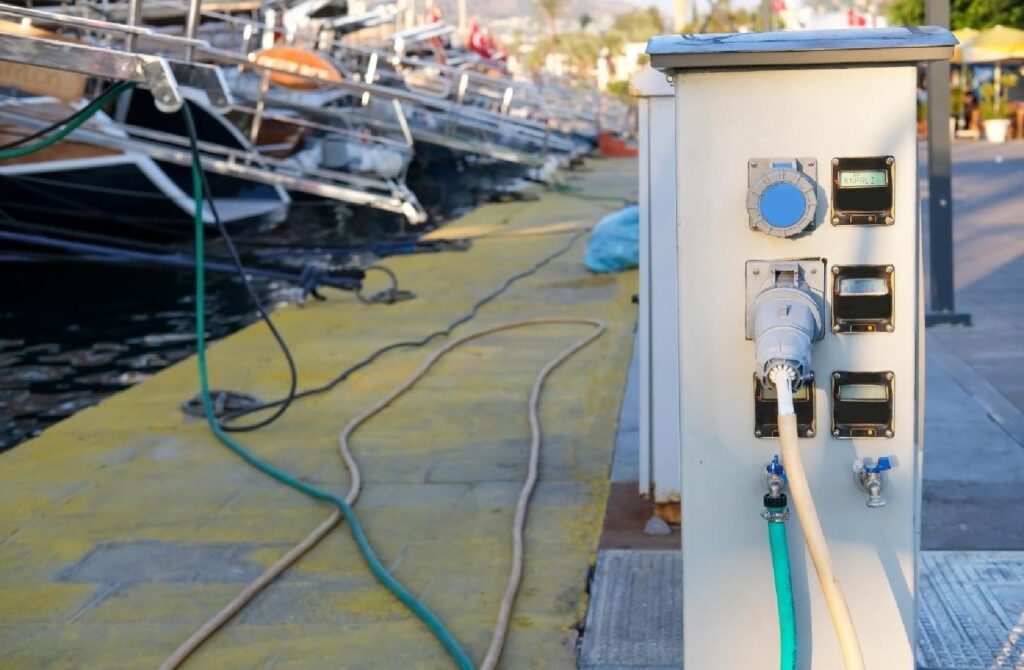
What Digital Boat Lift Controls Actually Do Differently
Ultimately, the thing that separates old and new is the ability to precisely control movement and provide feedback. In essence, digital boat lift controls enable you to do what a manual control just can’t.
The motor doesn’t just go at high speed and bump into the mechanical stops; the speed is ramped up and down in relation to where the lift is in its travel range. Speed is slowed up at the top and bottom to prevent the jarring which would eventually damage the cradle bunks, cables and frame welds. The lift itself is smooth and the boat sits down gently onto the cradle.
Variable speed is paired with load sensing in higher-end systems. If the motor is pulling more current than expected because of a fouled cable, uneven loading, or an obstruction, the system stops automatically and alerts the operator. That single feature has saved more than a few boats from damage caused by a lift that kept running when it should have stopped.
Position memory is another major advantage. Once the digital boat lift controls learn the correct travel limits, it stops precisely at those points every time. No more checking by eye or nudging the lift an inch at a time. Digital boat lift controls make every cycle repeatable, which protects both the boat and the lift hardware.
Remote Operation and What It Changes About Your Routine
Most current digital boat lift controls include wireless remote capability, and once you use it, you will not go back to walking to the dock box every time. At your fingertips by a push of a button at the boat at the dock, at the back porch, it is simple and easy. But where Tarpon Point Marina or a private slip off Pine Island Road, that convenience means more than just pleasure; it is a necessity.
Consider how many times you deal with the lift in a week. Leave in the morning, come back in the afternoon. Pop in for a quick drying cycle, perhaps? Walk to the panel, stab in the sequence, walk back, check the cradle, walk back again. Repeat for months/years, and it doesn’t half add up. Remote operation collapses all of that into a quick button press from wherever you happen to be standing. It is not a luxury feature; it is just a smarter way to manage a task you do constantly.
Some digital boat lift controls now offer smartphone integration, putting full control in your pocket. We could also power up the lift from a distance when a storm is moving in, verify where the cradle is before reversing the boat into position, and get warning messages if anything is wrong. This level of connectivity simply blends into the way many of us currently manage our lives and machinery.
Protecting Your Lift Investment With Smarter Technology
Good digital boat lift controls is an expensive purchase. This really adds up when you consider the framework of either galvanized steel or aluminum, stainless fasteners, and good cabling and motors. Take care of your investment, you don’t want to lose control of system performance! Older single-speed controls work the motor hard on every cycle. The starts and stops are abrupt, and that mechanical stress accumulates.
Digital boat lift controls extend the working life of every mechanical component on the lift by reducing peak loads and eliminating hard stops. The cables see less shock loading. The gearbox runs cooler because it is not fighting through full-speed stops repeatedly. The frame takes less stress because the cradle settles down gradually rather than dropping in. Over a five- or ten-year ownership window, the reduction in repair and replacement costs from running a smoother system is real money.
Along the Cape Coral waterfront, where lifts run year-round and conditions are tough, that durability matters. The team at Dockside Mobile Boat and Lift Maintenance has replaced plenty of burned-out motors and cracked frames on lifts that were controlled by single-speed systems. The pattern is consistent the newer digital boat lift controls systems on comparable lifts outlast the old ones by a wide margin.
Installation Considerations and What to Expect
Not all digital boat lift controls upgrades are created equal. You need a system that will be compatible with the motor type you have, the capacity of your lift, if you are looking to control it remotely and the configuration of the electrical panel at your dock. Most of the homes that we encounter with residential boat lifts in the Cape Coral area are wired with 110 or 220 V service.
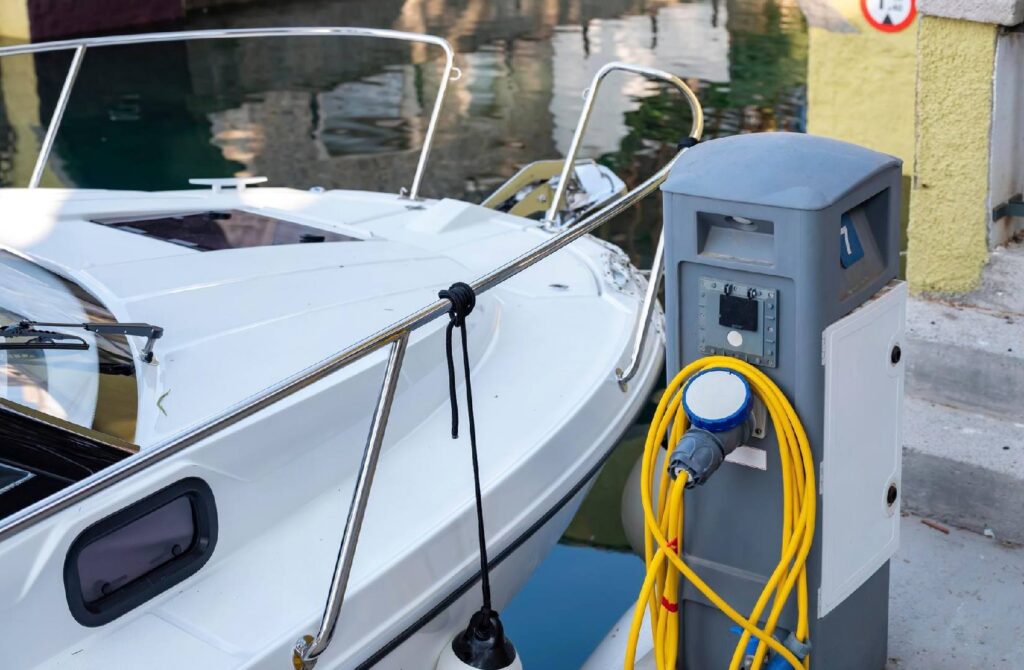
What Our Installation Process Covers
When the team at Dockside Mobile Boat and Lift Maintenance handles a control system upgrade, the job covers more than swapping a panel:
- Full inspection of existing wiring from the power source to the boat motor
- Testing motor condition and verifying it is compatible with variable frequency drive controls
- Programming travel limits and setting load thresholds
- Remote pairing and range testing
- Final calibration run with the boat on the cradle to confirm positioning accuracy.
Getting those steps right matters. A digital boat lift controls system installed without proper limit programming will not perform the way it should, and it can actually cause the same abrupt stops as the old system. The installation is where the upgrade either delivers on its promise or falls short.
Boat Lift Solutions Tailored to Your Dock Setup
Not every dock is the same. Freshwater lifts at Matlacha Pass act differently from saltwater lifts that have a direct outlet to Charlotte Harbor. Water clarity, daily tidal swings, weekly load cycles, and UV penetration will influence whether any specific type of control system is appropriate for you. That means working with what your dock actually has, not selling a generic package that may not suit your configuration.
For high-use Boat Lift Solutions in Cape Coral, FL that run multiple times a day, variable frequency drive systems with full load sensing give you the most protection. For lighter-use residential slips, a quality programmable limit switch system with wireless remote covers the practical bases without overcomplicating things. The goal is to match the technology to the usage pattern so you get the reliability and convenience without paying for features you will never use.
Signs Your Current Controls Are Overdue for an Upgrade
If any of these describe your lift right now, a control system upgrade should be on your short list:
- Controls are more than ten years old or show visible corrosion
- The lift runs at one speed with no ramping at stops
- You have had switch or contactor failures in the past two years
- The motor runs hot or trips breakers under normal load
- You do not have a remote option and want one
- The cradle position varies and requires manual adjustment to correct
These are all signs that the existing control system is working against the lift rather than protecting it. Every one of these issues gets addressed by moving to a modern digital boat lift controls setup.
Why the Upgrade Makes Sense Now
Digital boat lift controls technology has matured. Wireless remotes are standard rather than optional on most product lines. Installation has become faster as the industry has standardized on common motor and wiring configurations. And the track record of these systems in saltwater environments including right here in Southwest Florida is solid. When you compare what older push-button panels put your lift through versus the smooth, measured operation that digital boat lift controls deliver, the case for upgrading becomes hard to argue against.
Delaying an upgrade normally means you wait until you have a breakdown. This is usually at the most awkward time in the day, at the earliest part of the morning when you want to get going, at the latest part of a long day at sea before a storm where you need the uplift. With an upgrade you control the time. You get the system installed and calibrated when conditions are ideal, not when you are under pressure.
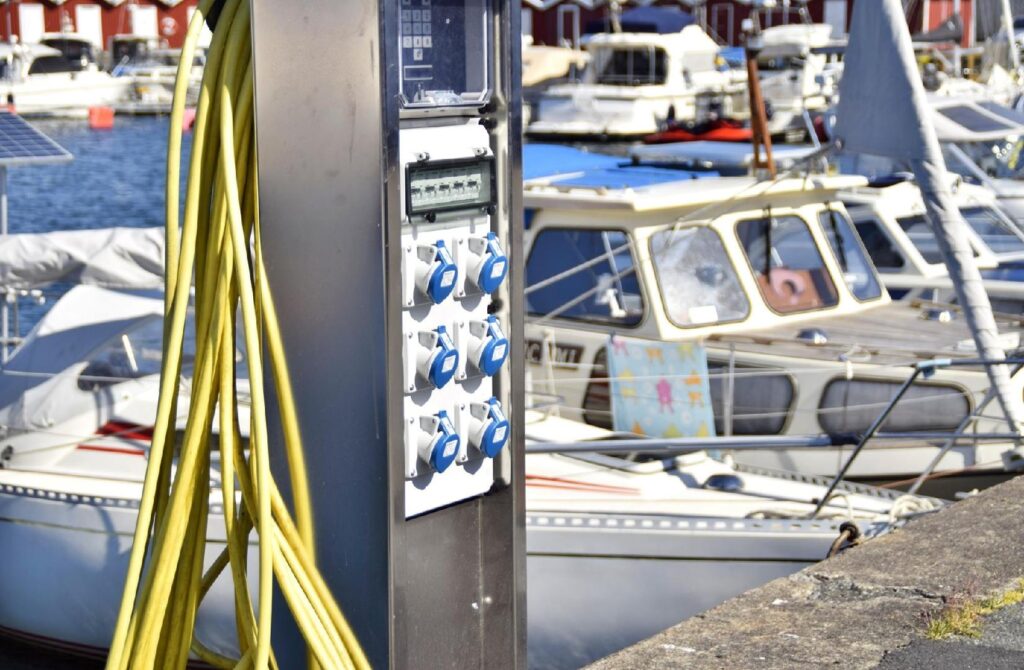
Reach Out for Boat Lift Services
If the lift at your dock is still running on older technology, it is worth a conversation about what a controls upgrade would look like for your specific setup. Dockside Mobile Boat and Lift Maintenance provides full lift service and upgrade work across the area, with mobile crews who come to your dock no hauling the lift anywhere, no waiting in a shop queue. We analyze your current system and show you the most appropriate system upgrade, and carry out all Boat Lift Services in Cape Coral, FL including the panel and pairing remote. Call Dockside Mobile Boat and Lift Maintenance and let’s get your lift working how it should be!